Pu Luong Nature Reserve
Limestone forest, terraced valleys and White Thai stilt villages four hours from Hanoi. What it is, how long it deserves, and what the lodge boom has done to it.
At a glance
| Region | Western Thanh Hoa, which was not affected by the 2025 provincial merger |
| Nights worth staying | 2 to 3 |
| Altitude | Valley floors 100 - 300 m, ridges to about 1,700 m |
| Nearest airport | Noi Bai, Hanoi, 165 km |
| Getting there | 4 h by road; no train, no bus that helps |
| Best months | Late September to early December, and February to May |
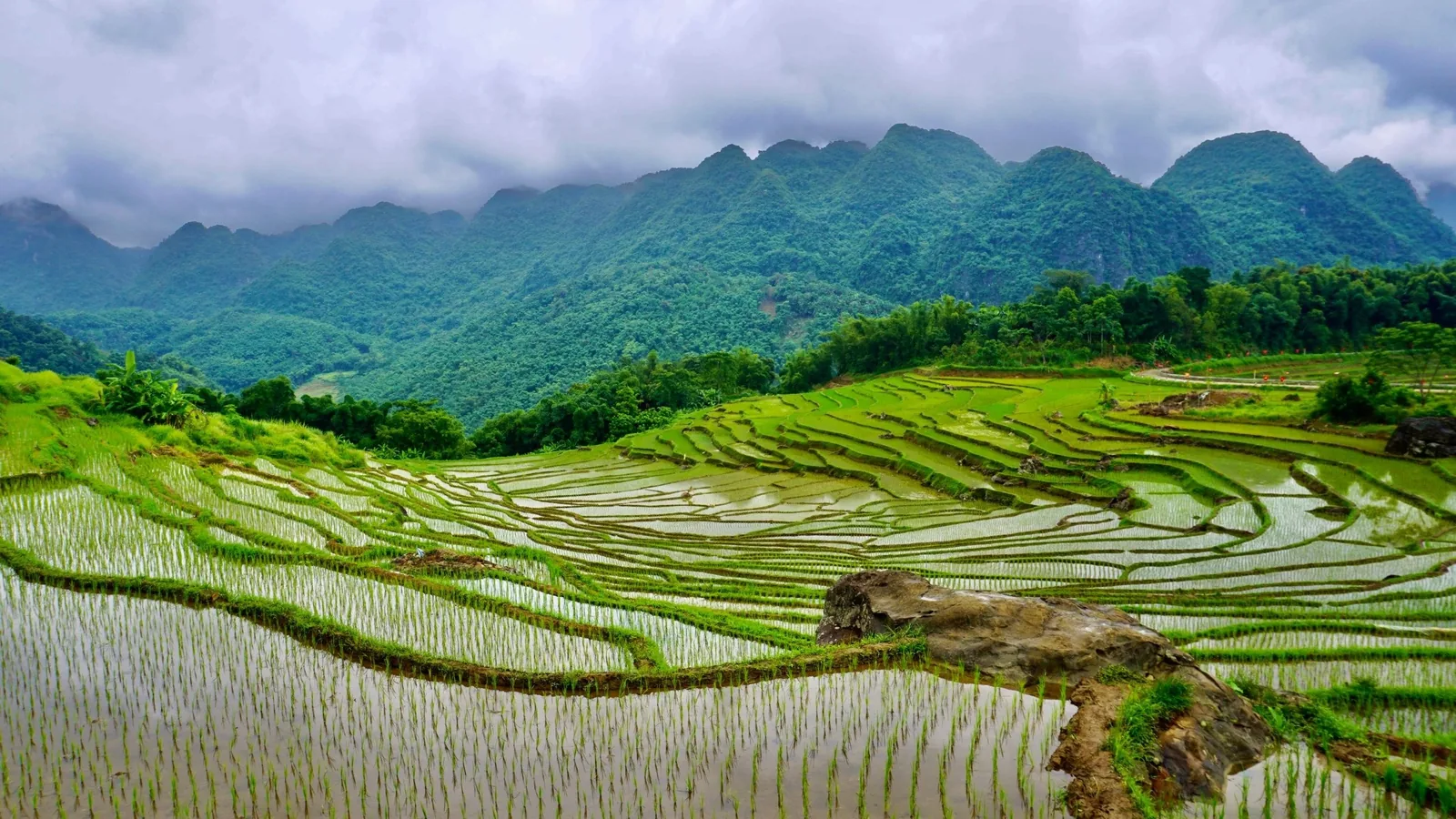
| Rice green | Late May to June |
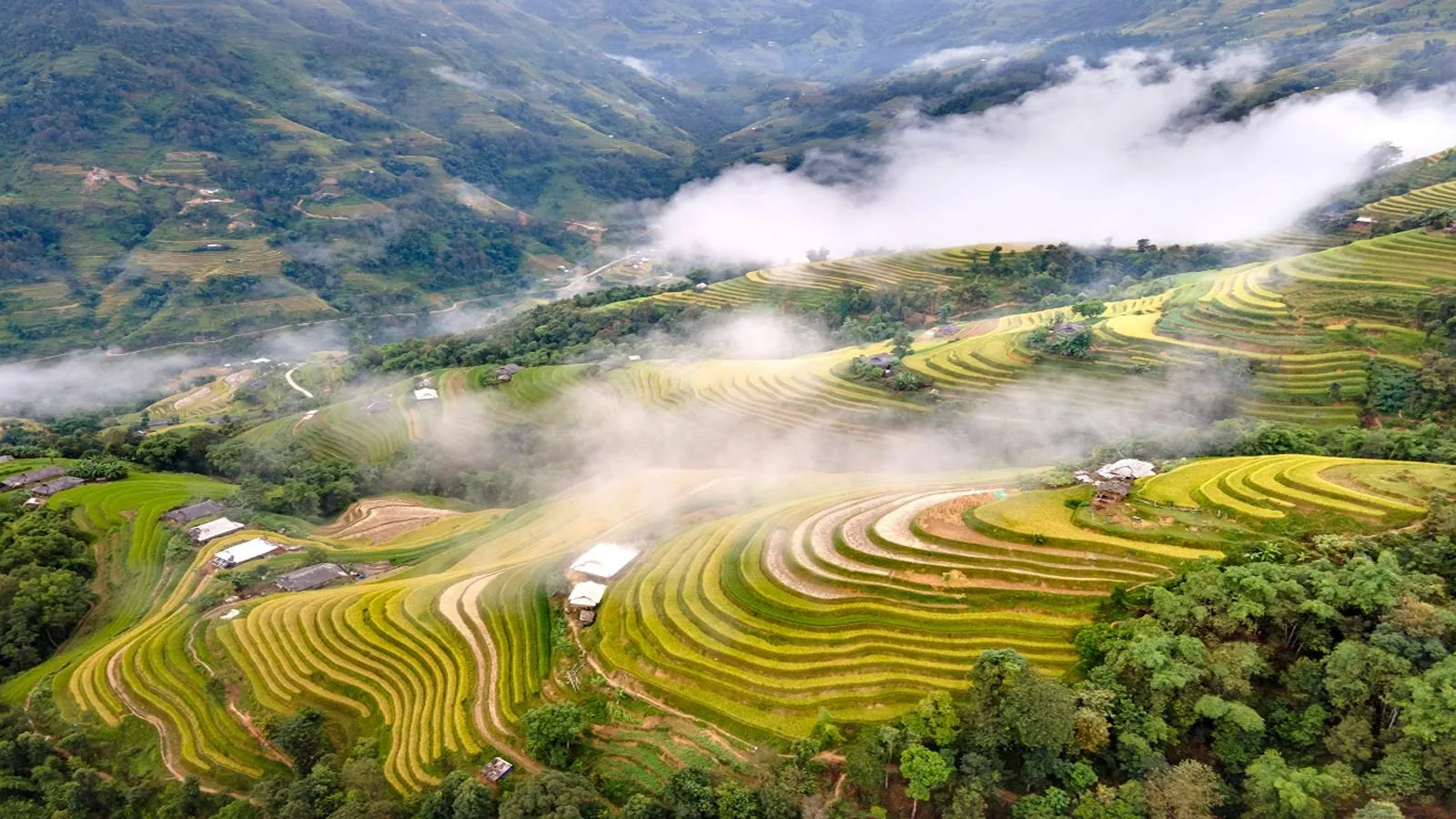
| Rice gold | Late September to early October |
What this place actually is
Pu Luong is a nature reserve of about 17,500 hectares on the same limestone belt that runs north-west into Hoa Binh and eventually into Laos. Two parallel ridges run along it with a valley between them, and the reserve protects limestone evergreen forest on the high ground while people farm the valley floors below. It holds Delacour's langur, among the rarest primates in the world, though you will almost certainly not see one from a path.
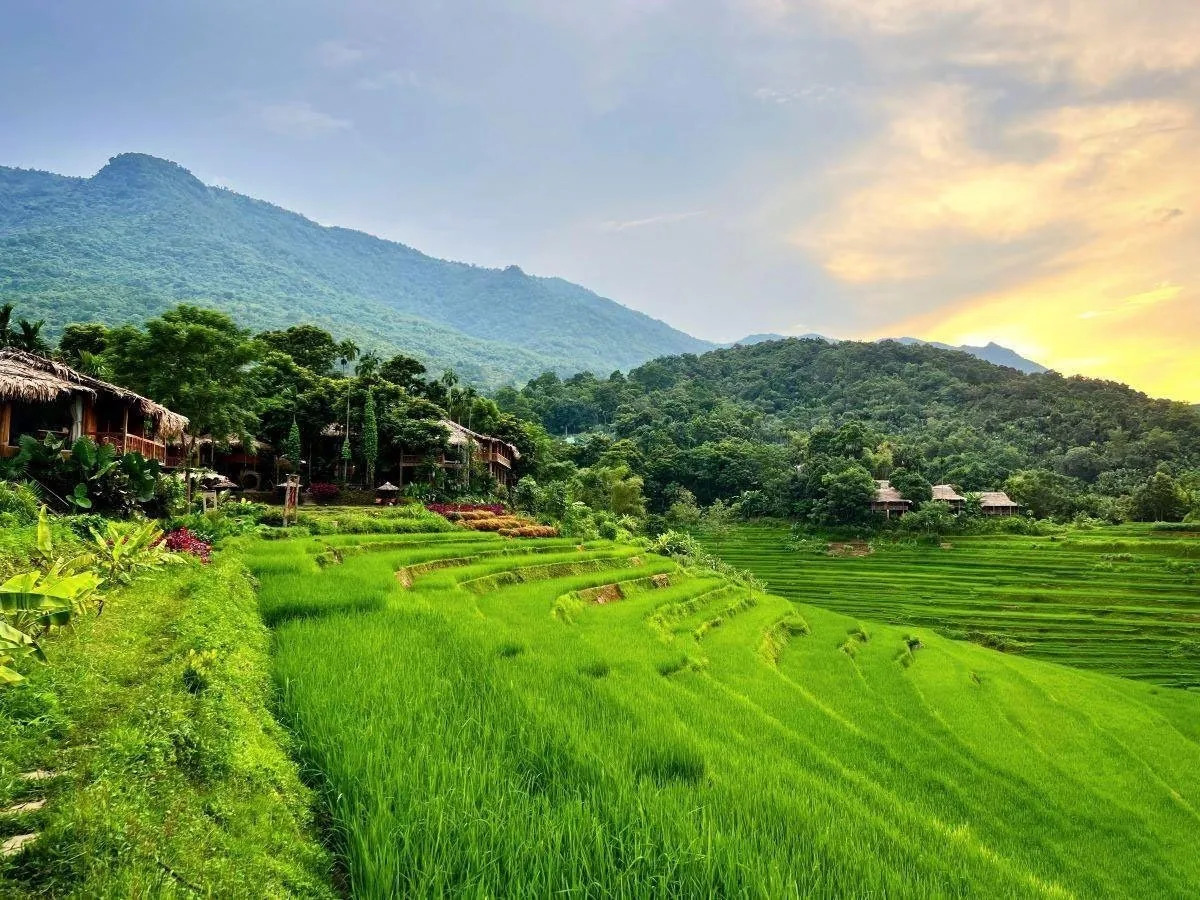
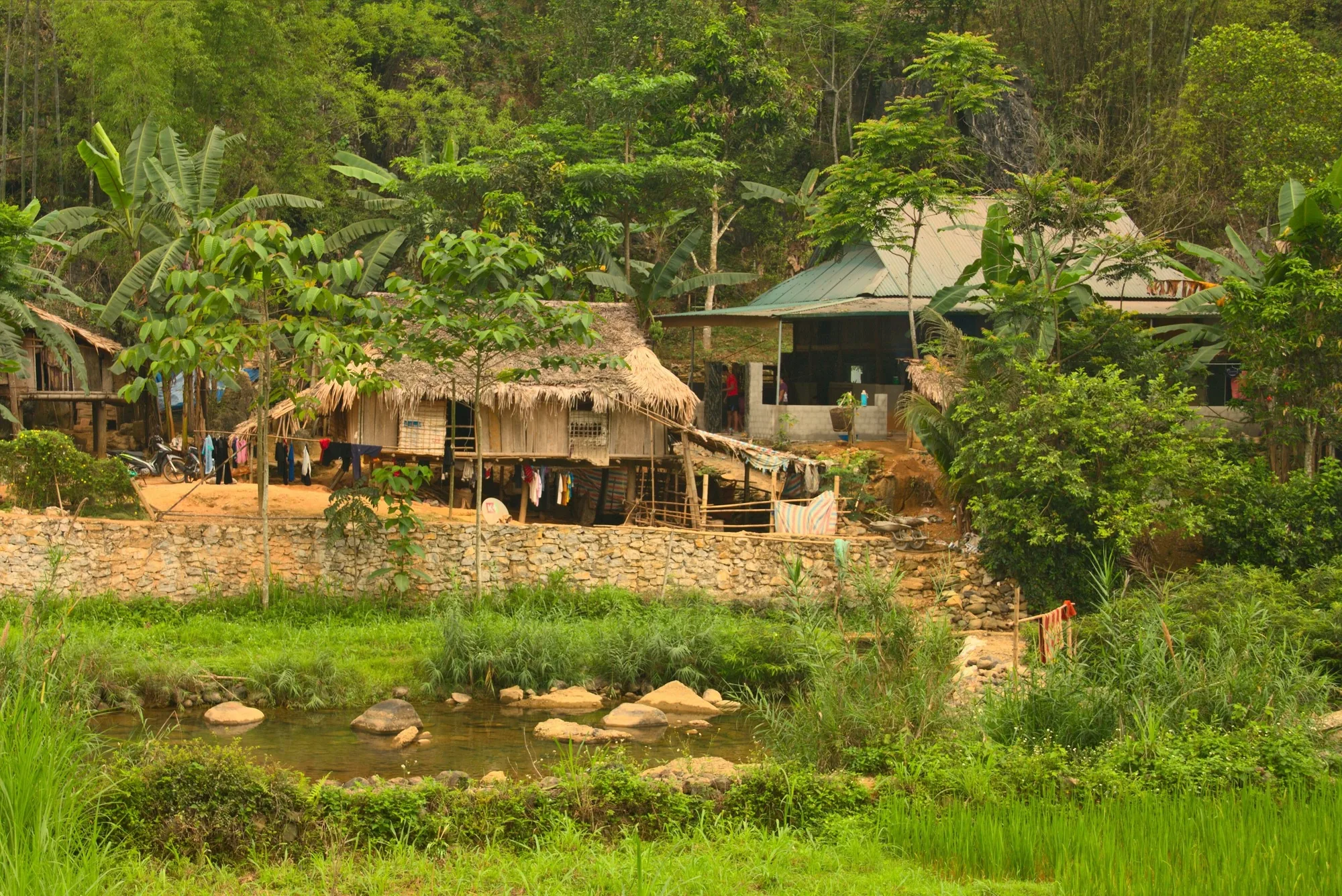
What you do see is a working agricultural landscape that has been shaped for a very long time. Terraces step down every valley. Wooden waterwheels three to four metres across turn in the streams, lifting water into the top paddies through split bamboo. The villages are White Thai and Muong: stilt houses with the family living on the raised floor and the animals below, though most now keep the animals separately.
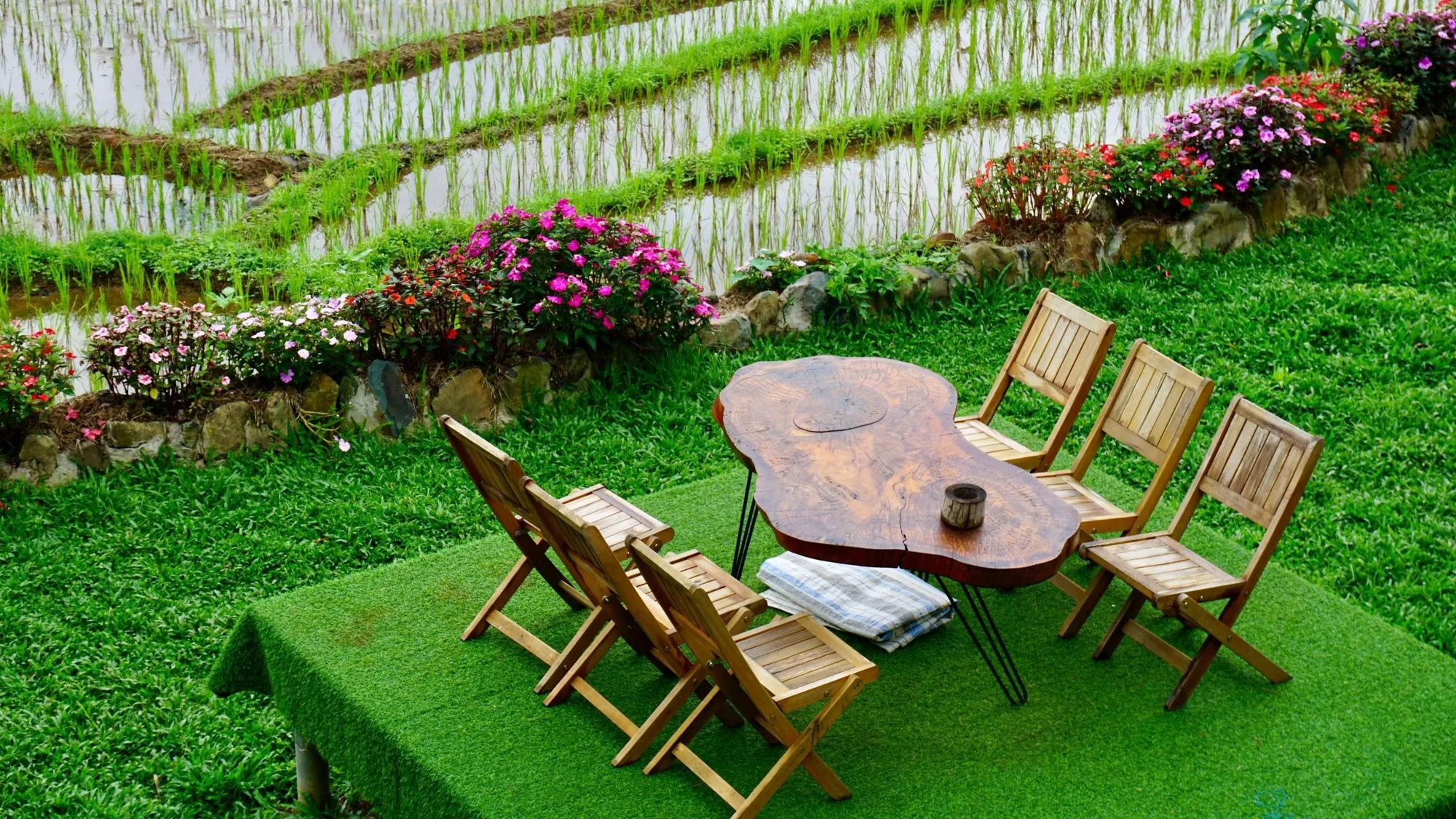
Pu Luong has changed fast. Ten years ago there were a handful of homestays. There are now somewhere around forty places calling themselves eco-lodges, several with infinity pools over the terraces, and at weekends the valley fills with cars from Hanoi. The reserve itself is unchanged and the far valleys are quiet on a weekday. But if your image of Pu Luong is an undiscovered valley, that stopped being true about five years ago.
How many nights, and where
Two nights is enough to see it properly on foot. Three is comfortable. Beyond three you are repeating valleys, and the people who stay a week are here for the pool rather than the walking.
Where you sleep decides what kind of trip you have. The lodges cluster along the road through Ban Don and Ban Hieu, and staying in one means driving to the start of every walk. The village houses in Kho Muong, Son, Ba and Muoi are on the other side of the ridge with no through road, which means you arrive on foot and there is nothing to do in the evening except eat with the family and go to bed early. We think that is the point.
When to come
| Period | What it is like | Verdict |
|---|---|---|
| February to April | Dry, mild, 18 to 26 degrees, paddies flooded and being planted, forest coming into leaf | Excellent and quiet |
| Late May to June | First harvest, terraces at their greenest, heat building | Very good, hot by midday |
| July and August | 33 degrees on the valley floor with high humidity, heavy afternoon storms, leeches on the forest sections | The worst months here |
| Late September to October | Second harvest, terraces gold, clear air after the rains | The best three weeks, and busy at weekends |
| November and December | Cool, dry, stubble in the fields, the clearest visibility of the year | Good walking, less photogenic |
| January | Cold and often grey, 12 to 18 degrees, fields bare | Quiet, and the least rewarding month |
Pu Luong is the only region we walk in with two rice harvests, which gives it two green seasons and two gold ones. If your dates are fixed and you want terraces rather than stubble, tell us the exact week and we will tell you what will be in the ground.
Getting there
- Private vehicle from Hanoi. Four hours via Hoa Binh and the Mai Chau road, about 165 km. USD 120 to 160 per day for a seven-seater with driver. This is what almost everyone does and there is no better option.
- Public bus. Hanoi to Canh Nang takes five to six hours and drops you an hour short of the villages, from where you need a motorbike. Cheap, about USD 6, and only worth it if you have time to spare.
- Combined with Mai Chau. Mai Chau is on the way and adds about an hour. It is pleasant, flatter, and much more visited; a night there before Pu Luong works well.
- Inside the reserve. One road runs through the middle. Everything else is a path, and the good valleys are reached on foot or not at all.
What things cost here
| Item | Typical price |
|---|---|
| Village stilt-house bed with dinner and breakfast | USD 10 - 18 per person |
| Lodge room with a view over the terraces | USD 45 - 140 |
| Bowl of pho or a rice plate | USD 1.20 - 2.50 |
| Kho Muong cave entry | USD 1 - 2 |
| Bamboo raft on the Chang river | USD 6 - 10 per raft |
| Motorbike with a driver for a day | USD 18 - 25 |
| Reserve entry | Usually included in accommodation, otherwise about USD 1 |
Pictures of the reserve
When to skip Pu Luong
- If you want drama. This is a gentle, pretty, human-scale landscape. Ha Giang is the one that will stop you in your tracks.
- If you are here in July or August and mind heat. The climb out of the Hieu valley at 33 degrees and 85 per cent humidity is genuinely unpleasant.
- If you can only come at a weekend in October and want quiet. Fridays to Sundays in the high season the road through the reserve is busy with cars from Hanoi.
- If you have already booked Mai Chau and only have two days. They are forty minutes apart and similar in feel; one of the two is enough.
- If you want to see langurs. They are here, they are protected, and in six years our guides have seen them from the path about a dozen times.
Walking here with us
We run a three-day trek that sleeps in Ban Hieu and Kho Muong, crosses the ridge between them on the middle day, and finishes on a raft on the Chang river. It is graded 2 of 5 and it is the route we recommend when time is short or when the party includes someone unsure about a long day.
If you want more than this, Sa Pa gives you a similar landscape at a larger scale over four days, and Ha Giang is a different thing entirely. Prices for all three are on the pricing page.
Three days from Hanoi?
Pu Luong is the route that fits. Send us your dates.
Questions travellers ask most
Is Pu Luong better than Mai Chau?
For walking, yes and by some distance. Mai Chau is a flat valley with a lot of bicycle rental and organised evening performances; Pu Luong has ridges, forest and closed valleys you can only reach on foot. Mai Chau is easier with small children and better for a single night.
Do I need a guide here?
For the road and the marked paths around Ban Hieu, no. For the ridge crossing to Kho Muong and the Son, Ba and Muoi shelf, yes. Those are farm paths through forest with several forks and no signage, and people do get lost on them every season.
Are the eco-lodges worth it?
If you want a pool and a view, some are genuinely good and worth the USD 60 to 140. They are not where the walking is, and staying in one changes a trek into a series of drives to trailheads. We do not book them, and we say so rather than quietly substituting one for a village house.
Can I combine Pu Luong with Ninh Binh?
Yes, and it works well. They are about three and a half hours apart, both are limestone, and the character is different enough: Ninh Binh is river and cave country you see from a boat, Pu Luong is walking country. Two nights each is a sensible five-day trip out of Hanoi.
Read next
Tell us about the trek you have in mind
Dates, party size and the places you care about are enough to start. You get a draft route and an indicative price, not a brochure.