Sa Pa and the Muong Hoa valley
The most developed mountain town in Vietnam sits above one of its best valleys. How to tell the two apart, how many nights to give it, and when the terraces are worth the trip.
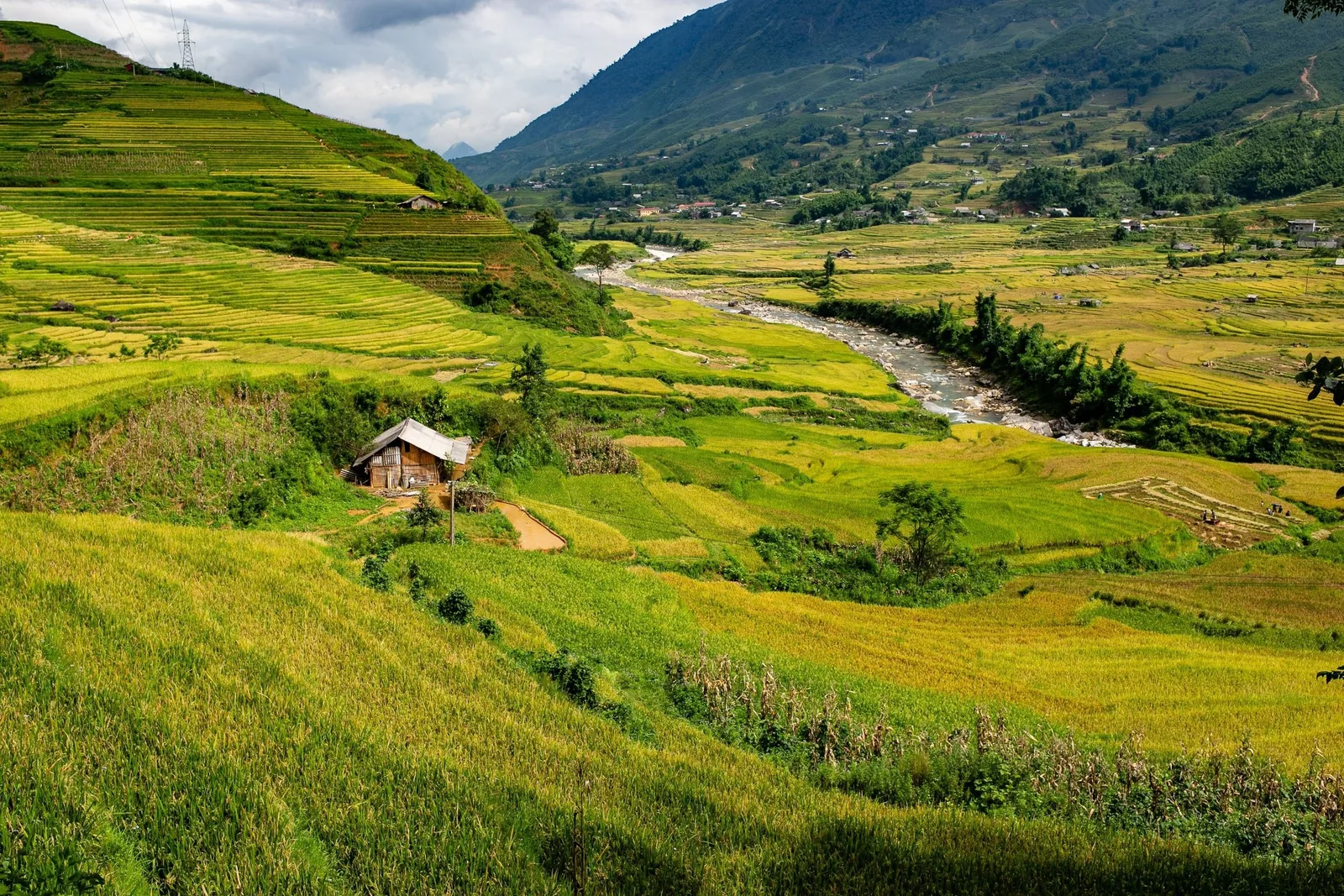
At a glance
| Region | Lao Cai province, which absorbed Yen Bai in the 2025 merger |
| Nights worth staying | 3 to 4, of which ideally none in the town |
| Altitude | Town 1,500 m, valley floor 400 - 900 m, Fansipan 3,143 m |
| Nearest airport | Noi Bai, Hanoi, 320 km |
| Getting there | 5 h 30 m by expressway, or the overnight train to Lao Cai |
| Best months | March to May, and mid-September to November |
| Terraces green | June and July |
| Terraces gold | Mid-September to the first week of October |
What this place actually is
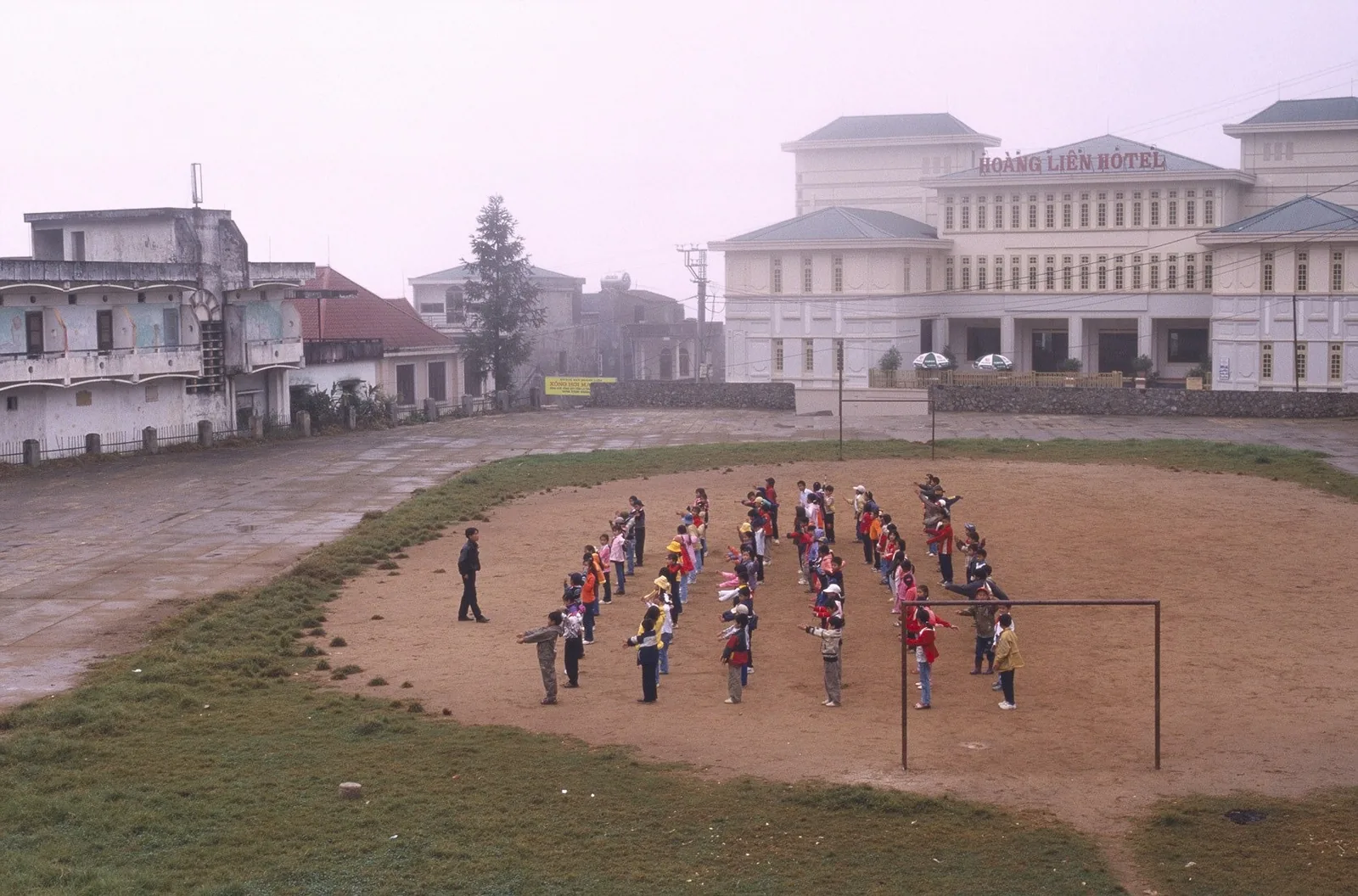
Two things that share a name. Sa Pa town is a hill station at 1,500 m that the French built and that Vietnam has spent the last fifteen years rebuilding in concrete. It has a cable car to the summit of Fansipan, opened in 2016, a lake that has been drained and relandscaped, and a skyline of unfinished hotels. It is not charming and people who arrive expecting charm are reliably disappointed.
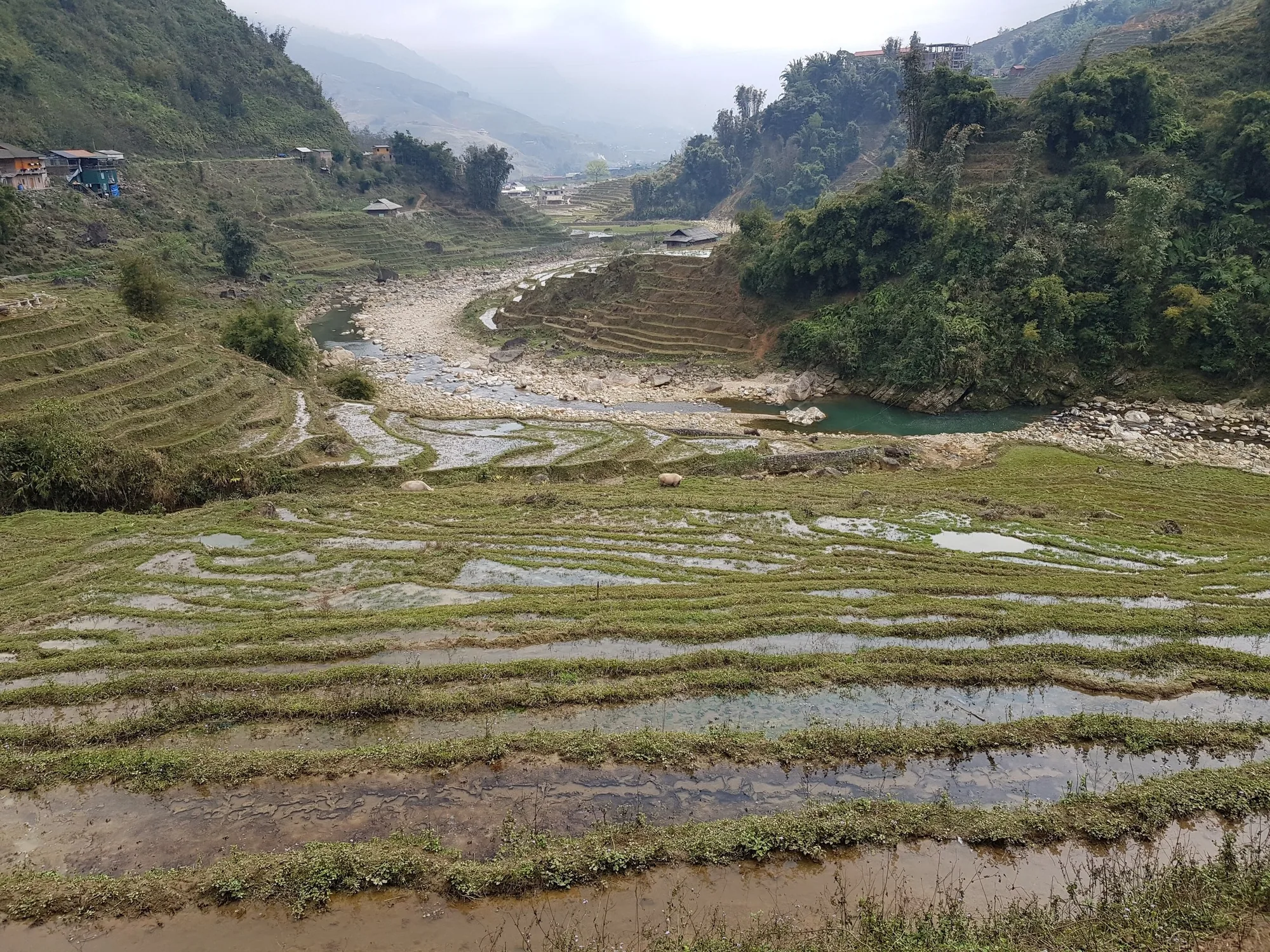
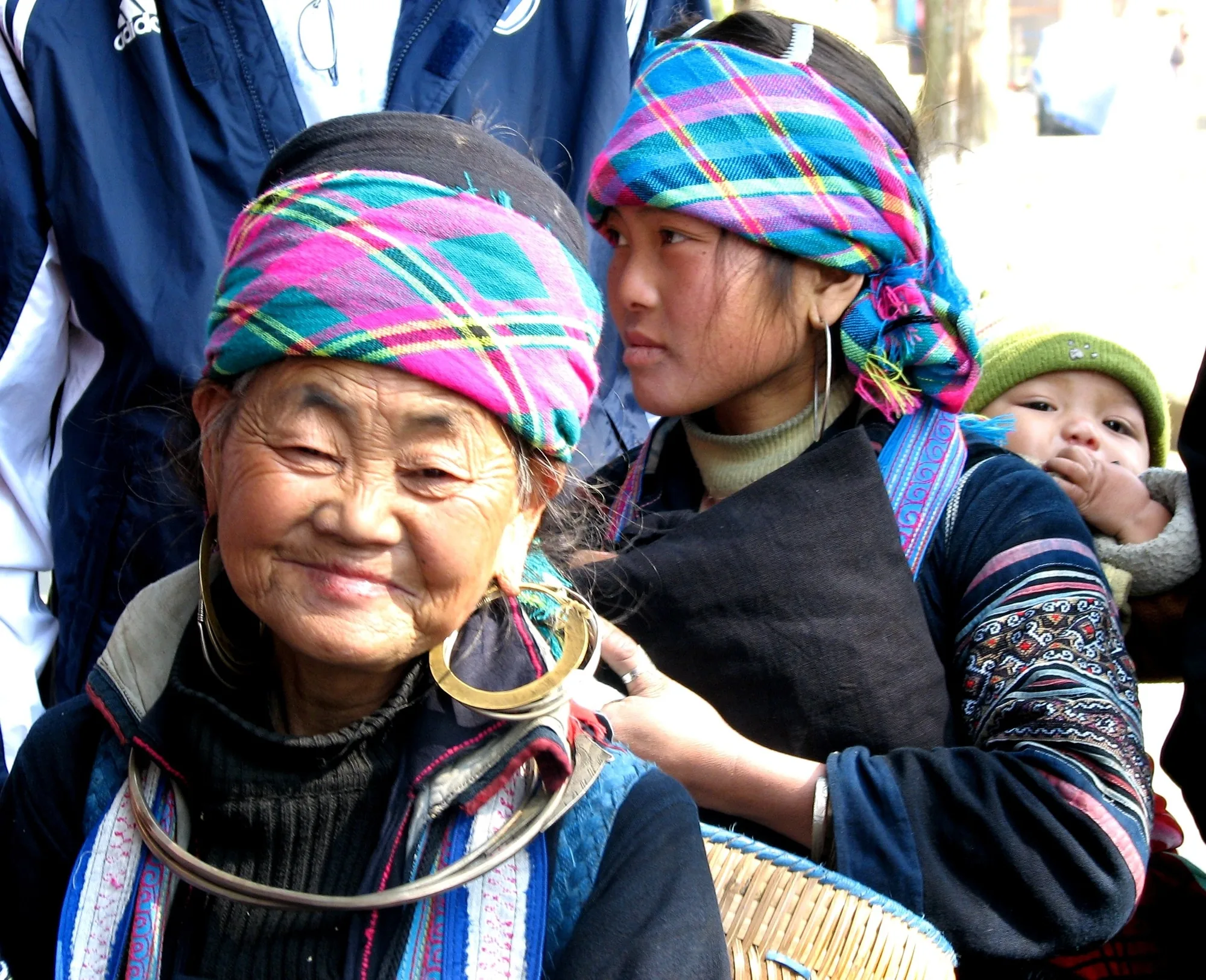
The Muong Hoa valley below it is the reason anyone comes. It runs south-east for about fifteen kilometres between the Hoang Lien Son ridge and the hills opposite, terraced from the stream up to roughly a thousand metres, with hamlets belonging to Black Hmong, Giay, Tay, Red Dao and Xa Pho families. Walk two hours from the town in almost any direction and the building sites end.
Above it all is Fansipan, at 3,143 m the highest point in Vietnam and, since the cable car, a summit you can reach in fifteen minutes wearing anything at all. There is a temple complex on top and a queue for the photograph. The walking routes up it still exist and are still hard, and the contrast between the two ways of arriving is the sharpest illustration of what has happened to this place.
How many nights, and where to put them
Three nights is the useful minimum and four is better. Where you sleep matters more than how long you stay.
A common itinerary puts three nights in a Sa Pa town hotel and runs day walks out of it. That means two vehicle transfers a day, a starting point shared with every other group, and evenings in a construction site. The alternative is to sleep in the valley: Lao Chai, Ta Van, Ban Ho, Ta Phin. The houses are simpler, the walking starts at the door, and the evening is a family kitchen rather than a karaoke bar.
If you want one comfortable night with a hot bath at the end, take it in the valley too. Several Ta Van houses now have private rooms with proper bathrooms at USD 35 to 60, which is a better trade than a four-star room in the town.
When to come
| Period | What it is like | Verdict |
|---|---|---|
| March to May | Warm days, clear mornings, terraces flooded and being planted, wild flowers on the higher paths | Excellent, and much quieter than autumn |
| June and July | Terraces at their greenest, heavy afternoon rain, mud on every path, leeches in the forest | Beautiful and hard work |
| August to mid-September | The wettest weeks and the highest landslide risk on the valley roads | Avoid if you can |
| Mid-September to early October | Rice turning gold across the whole valley, clear air, cool nights | The best two weeks of the year, and fully booked |
| Late October to November | Terraces cut, low sun, sharp visibility, cold mornings | Very good and underrated |
| December to February | Fog for days, 8 to 12 degrees in the valley, occasional snow in the town, bare terraces | Quiet and atmospheric, not scenic |
The single most common disappointment we hear about Sa Pa is someone who came in late October expecting gold terraces and found cut stubble. The gold window is about three weeks and it moves with the year. Ask us before you fix dates around it.
Getting there
- Road from Hanoi. Five and a half hours on the Noi Bai to Lao Cai expressway plus the climb to Sa Pa. Private seven-seater about USD 130 to 170 per day; a limousine van seat is USD 14 to 22.
- Overnight train to Lao Cai. Roughly eight hours in a soft sleeper, about USD 25 to 55 depending on the carriage, then forty minutes uphill by road. Slower than driving now, but it saves a day if you sleep well on trains.
- Cable car to Fansipan. Around USD 30 return from the station above the town, plus a funicular to reach the station. Fifteen minutes each way.
- In the valley. Everything within the Muong Hoa valley is walkable; the road down it is narrow, busy with motorbikes and unpleasant on foot, so walk the paths above it rather than the tarmac.
What things cost here
| Item | Typical price |
|---|---|
| Homestay bed with dinner and breakfast | USD 12 - 22 per person |
| Private room in a valley homestay | USD 35 - 60 |
| Hotel room in Sa Pa town | USD 25 - 120 |
| Bowl of pho or a rice plate | USD 1.50 - 3 |
| Red Dao herbal bath at Ta Phin | USD 5 - 8 |
| Fansipan cable car, return | USD 28 - 32 |
| Local guide for a day, arranged in the village | USD 15 - 25 |
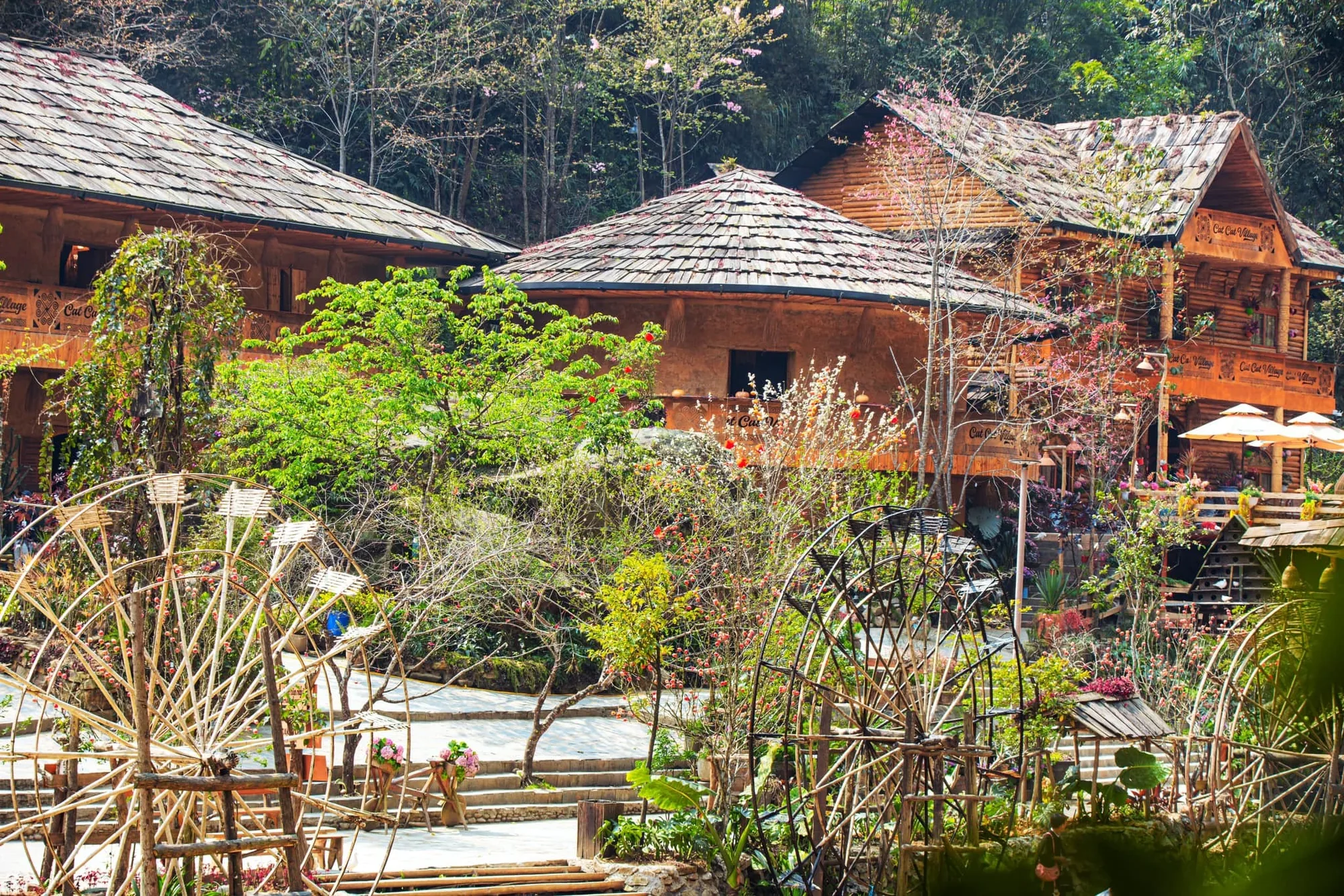
Pictures of the valley
When to skip Sa Pa
- If you have already booked Pu Luong or Mu Cang Chai and only have three days left. The terraces will rhyme and you will feel it.
- If you are coming in August. It is the wettest month, the paths are mud, and the valley roads close after the heaviest nights.
- If being approached to buy handicrafts on the trail is going to spoil your day. It happens on the popular sections, politely and persistently, and it is a real economy.
- If you want the mountains to yourself. Sa Pa receives more visitors than the rest of northern Vietnam combined, and even the good valleys are busy in October.
- If your interest in Fansipan is reaching the summit rather than walking to it. The cable car does that in fifteen minutes and does not need a trekking company.
Walking here with us
We run a four-day homestay trek that sleeps in three different valleys and passes through the town twice, briefly. It is our easiest northern route at grade 2 of 5, and the one we recommend for families with teenagers.
If four days is too long, Pu Luong gives you a similar landscape in three. If Sa Pa sounds too busy, Ha Giang is the harder, emptier alternative.
Want the terraces gold?
Send us your travel window and we will tell you honestly whether it lands.
Questions travellers ask most
Is Sa Pa ruined?
The town, largely. The valley, no. That distinction is the single most useful thing to know before you book, and it is why our itinerary sleeps in villages and treats the town as a lunch stop and a car park.
Can I walk up Fansipan instead of taking the cable car?
Yes. The usual route from Tram Ton is two days with a night at around 2,800 m, and it is a genuine mountain day with a lot of ascent, wet rock and cold. We run it privately for people who have already walked with us; we do not sell it to someone we have never met, because turning a party around at 2,800 m is a hard conversation to have with a stranger.
Which village should I stay in?
Ta Van if you want a private room and hot water, Lao Chai if you want to be walking within five minutes of breakfast, Ban Ho if you want warmth and a river to swim in, Ta Phin if you want Red Dao rather than Hmong. Our four-day route uses three of these four.
Do I need a guide to walk in the valley?
For the main path from the town to Ta Van, no. For anything beyond it, yes, and not for safety so much as navigation: the paths are farm routes that fork constantly, they are not marked, and offline maps show tracks that stop existing halfway along.
Read next
Tell us about the trek you have in mind
Dates, party size and the places you care about are enough to start. You get a draft route and an indicative price, not a brochure.